
Running a Hendry County Offender Check
Two official views serve Hendry County. The Florida Sexual Offenders and Predators Search is the authoritative statewide layer. It can search by a person's name or by place. The Hendry County Sheriff offender map and list provides a local display with a text filter, map points, addresses, and current status labels. Start with FDLE when legal designation and statewide registration detail matter. Use the sheriff view to understand the local setting.
Prepare the spelling of a name, a street address, city, ZIP code, or the Hendry County filter. Open the full record before drawing a conclusion. Similar names and changed addresses can mislead a quick scan. Each profile reflects registry law, not every arrest or conviction in Florida. Broader questions belong in the county's criminal history overview.
Hendry County Registry Map
The sheriff's interface is useful when a reader wants a county-centered view. Its cards distinguish such labels as released subject to registration, confinement, supervised, absconded, and deceased. Those terms describe registration or custody status. They do not grade the seriousness of a past offense. A map point also depends on the address data and the map service's geocoding, which converts a written address into a location.
The official Hendry County map source shows how the local filter and map are presented.
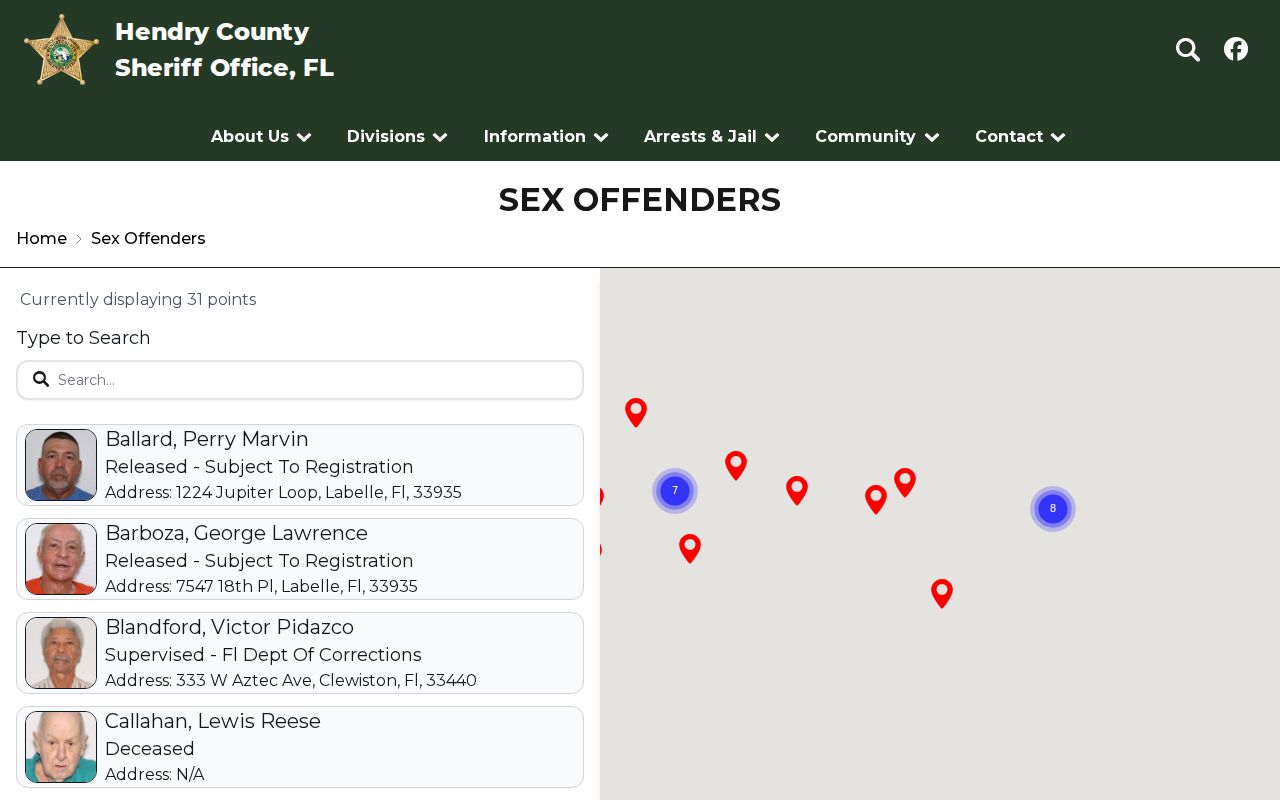
This local screen is a practical supplement, but FDLE remains the statewide source for the underlying public registration profile.
Searching the Florida Offender Registry
FDLE lets the public search without treating the registry as a general background-check product. Place searches can focus on Hendry County, Clewiston, LaBelle, a ZIP code, or a street area. Name searches work best with the legal spelling and known aliases. Interface options can change, so read the labels shown on the live form.
- Open the FDLE registry and read its conditions of use.
- Choose a name search or a neighborhood filter such as address, city, ZIP, or Hendry County.
- Review the list or map, then compare identifiers before selecting a result.
- Open the profile and read its designation, status, addresses, offense details, and agency contacts.
| Field | Type | Required | Use |
|---|---|---|---|
| Last and first name | Text | No | Name search; confirm partial or exact behavior live |
| Address | Text | Neighborhood mode | Combine with city or ZIP |
| City or county | Text or select | No | Choose Clewiston, LaBelle, or Hendry |
| ZIP | Text | No | Five-digit place filter |
| Radius | Select | Address mode | Distance options may change |
| Map, list, profile | View controls | No | Move from location to record detail |
The FDLE registry home screen is the correct entry point for a new Hendry County search.
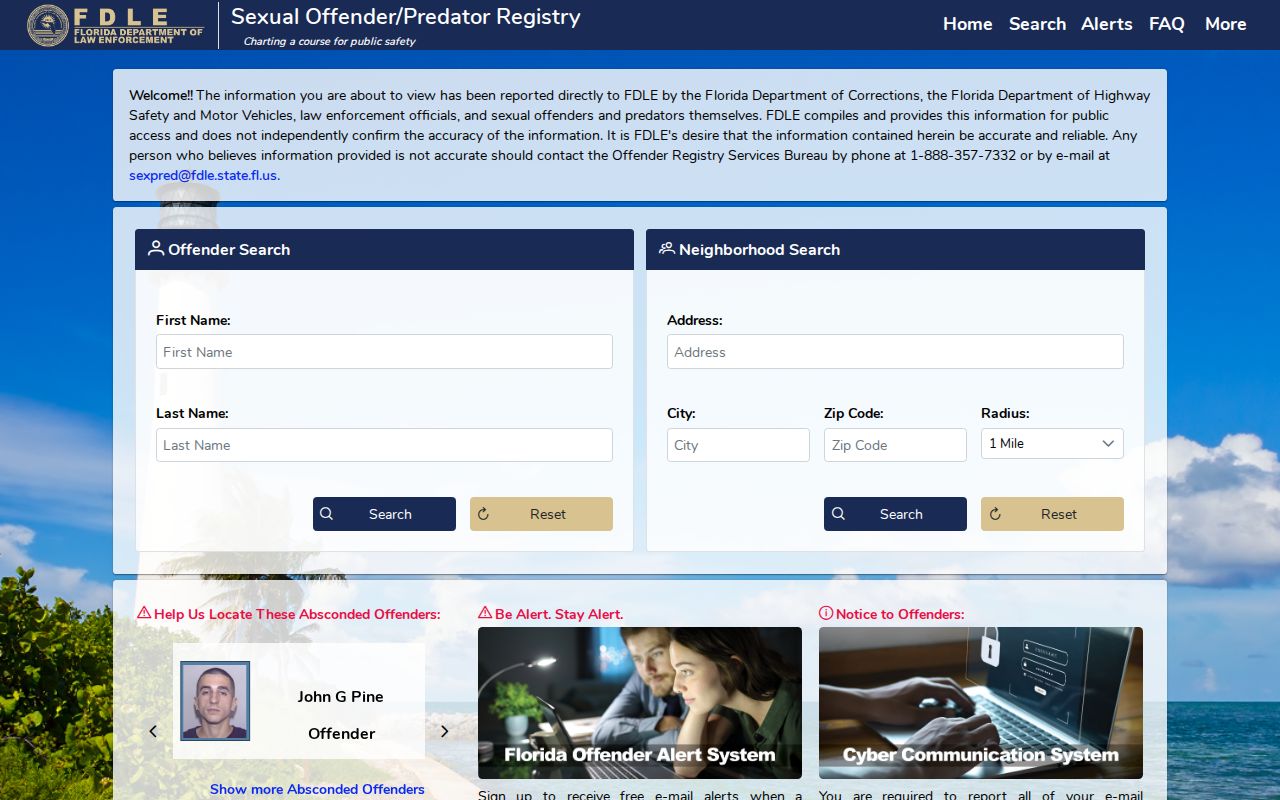
Starting at the current FDLE page avoids stale bookmarks and keeps the search tied to Florida's official registry.
Run more than one place search when the safety question covers a broad part of Hendry County. A city filter can find records labeled to Clewiston or LaBelle, while the county filter can include addresses outside either incorporated city. A ZIP search crosses local boundaries according to postal geography, and an address-radius search depends on how the location is mapped. Compare the resulting profiles and current addresses rather than adding totals from overlapping searches, which can count the same profile more than once.
A name search also needs identity checks. Review aliases, birth information, physical description, photograph, and registration details before deciding that a result concerns the person sought. The registry may show several addresses or status terms, so the first line of a card is not the whole record. If a search produces no result, do not treat absence as proof of a clean criminal history. Most Florida crimes do not trigger registry duties, and protected or out-of-state information may require a different official source.
Hendry Address Results Need Context
A radius search is only as precise as the entered address and its map match. Rural roads, recent development, transient addresses, and a misspelled street can shift or shrink the results. Try both a full address and a broader Hendry County or ZIP search when the first map looks incomplete. Then inspect profiles rather than relying on map pins alone.
Registry addresses may be permanent, temporary, or transient. A profile can also show confinement or supervision instead of an ordinary residential status. The public should report a suspected bad address to law enforcement, not attempt to investigate a home or confront anyone.
Map distance is a viewing aid, not a legal measurement of a residency restriction. Florida residency rules depend on the applicable statute, offense date, status, and facts, while local map pins depend on geocoding. A pin near a school, park, or property line does not by itself establish a violation. Preserve the profile link and the address entered, then send a suspected discrepancy to Hendry Sheriff or FDLE for verification. Officials can compare registration records with information that is not shown on the public map.
What Hendry Registry Profiles Show
A Florida profile combines identity, registration, address, and qualifying-offense data. It may list aliases and several forms of address. Physical traits and markings help distinguish people with similar names. Offense entries state the law, jurisdiction, and conviction date when available. Vehicle or vessel data may also appear. The profile does not replace the court file that documents motions, pleas, and final judgment.
| Name and aliases | Legal display name and other reported names |
|---|---|
| Photo and description | Image, birth details, physical traits, scars, marks, or tattoos |
| Addresses | Current, permanent, temporary, or transient entries |
| Offense | Description, statute, jurisdiction, and conviction date |
| Designation | Florida sexual offender or sexual predator label |
| Status | Registration, compliance, custody, supervision, or absconded information |
The FDLE result interface demonstrates the public fields used after a search.
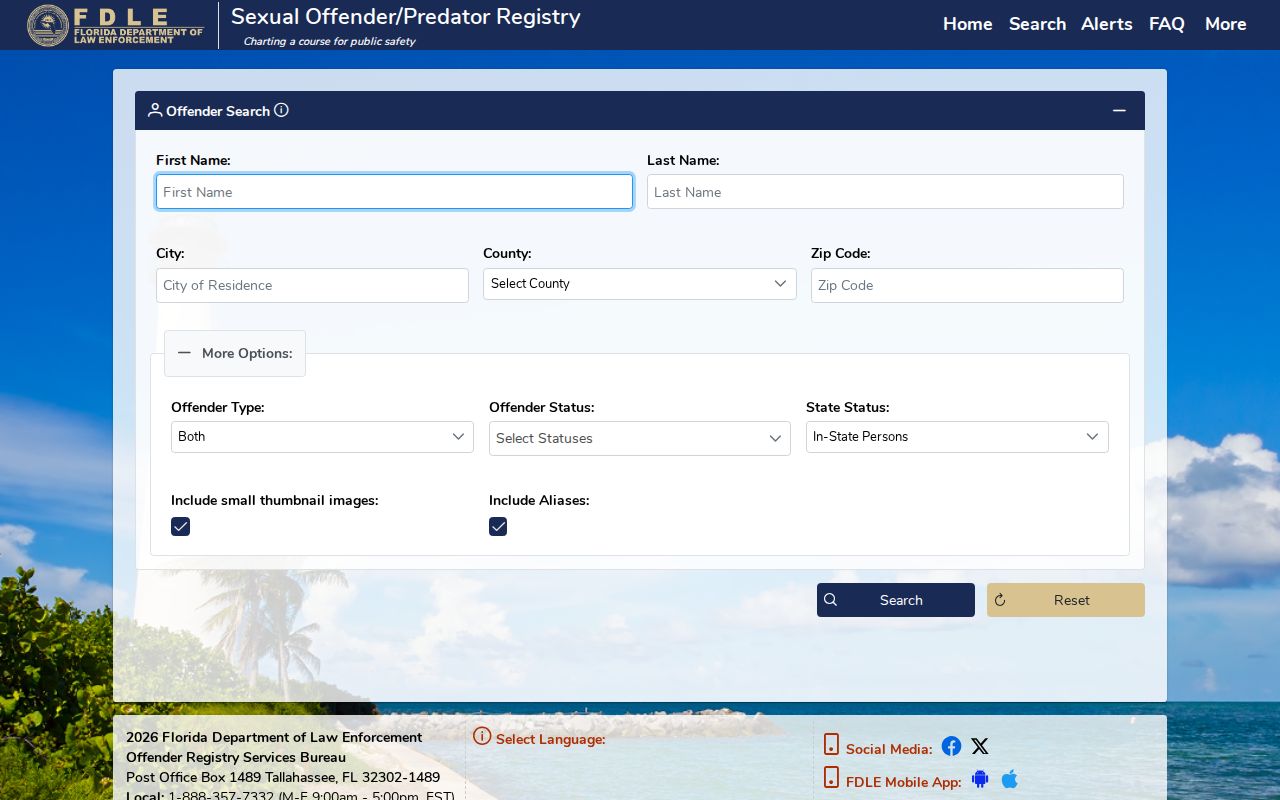
Reading the whole profile reduces the risk of mistaking a name or treating a status label as an offense level.
Florida Labels Are Not Tiers
Florida uses the public terms sexual offender and sexual predator. They are statutory designations, not federal Tier I, II, and III labels. Duration and reporting duties depend on the qualifying offense, date, designation, custody, and any relief allowed by current law. A simple ten-year, twenty-five-year, or lifetime chart would be inaccurate for Hendry County.
The Florida offender reporting statute shows why duties must be checked against the exact provision.
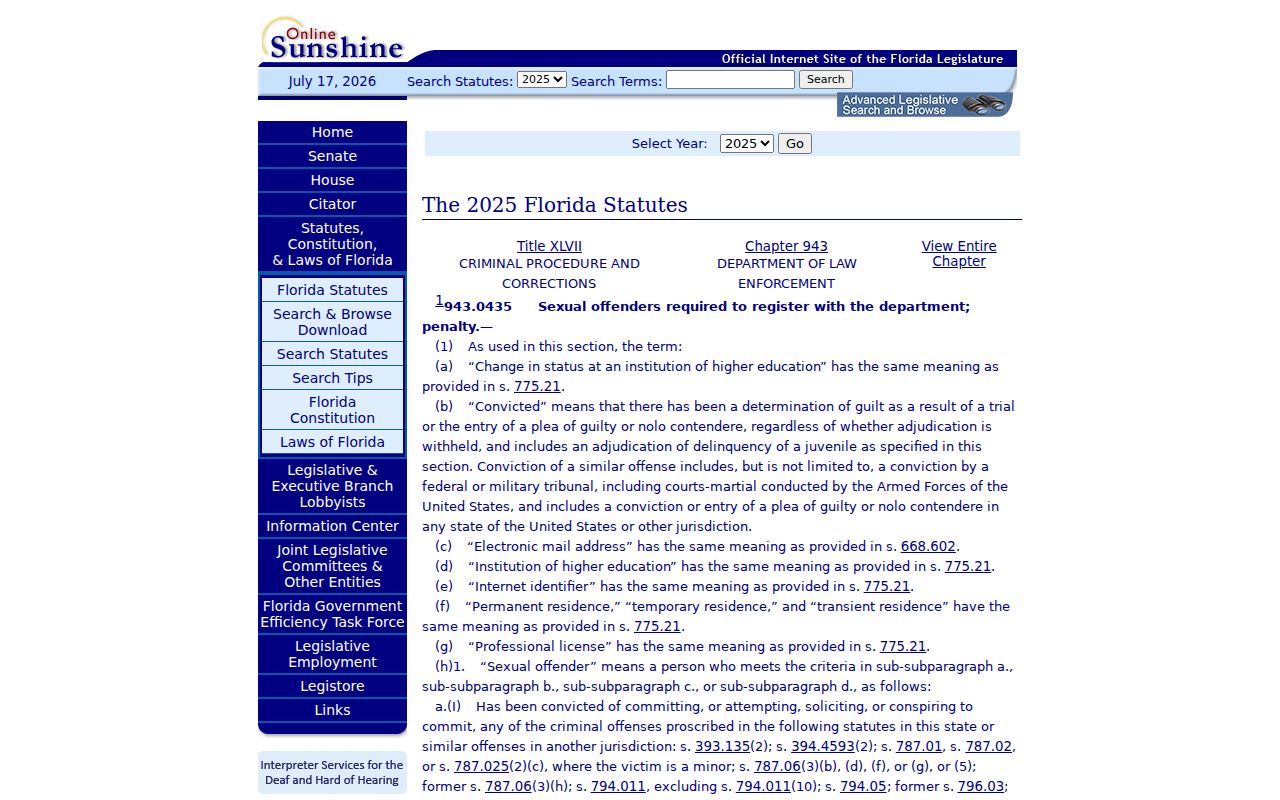
The statute supplies the legal detail that a short registry card cannot capture.
Florida Registration Duties in Hendry
Predators and many offenders face lifetime duties, but limited removal or cessation may exist only when the current statute permits it and all conditions are met. Juvenile registration follows a separate legal track. Absconded or noncompliant is a changing status, not a third offense class. Call the registering agency for current instructions instead of assuming a schedule from an old profile.
| Florida category | Public meaning | Duration note |
|---|---|---|
| Sexual offender | Meets a statutory registration trigger | Often lifetime; relief only if current law allows |
| Sexual predator | Court designation under section 775.21 | Lifetime registration and notification framework |
| Juvenile registrant | Limited qualifying adjudications | Separate juvenile rules apply |
| Absconded or noncompliant | Reporting or address status problem | Report promptly; status may change |
The Florida penalties statute adds context for offenses without turning the registry into a sentence chart.
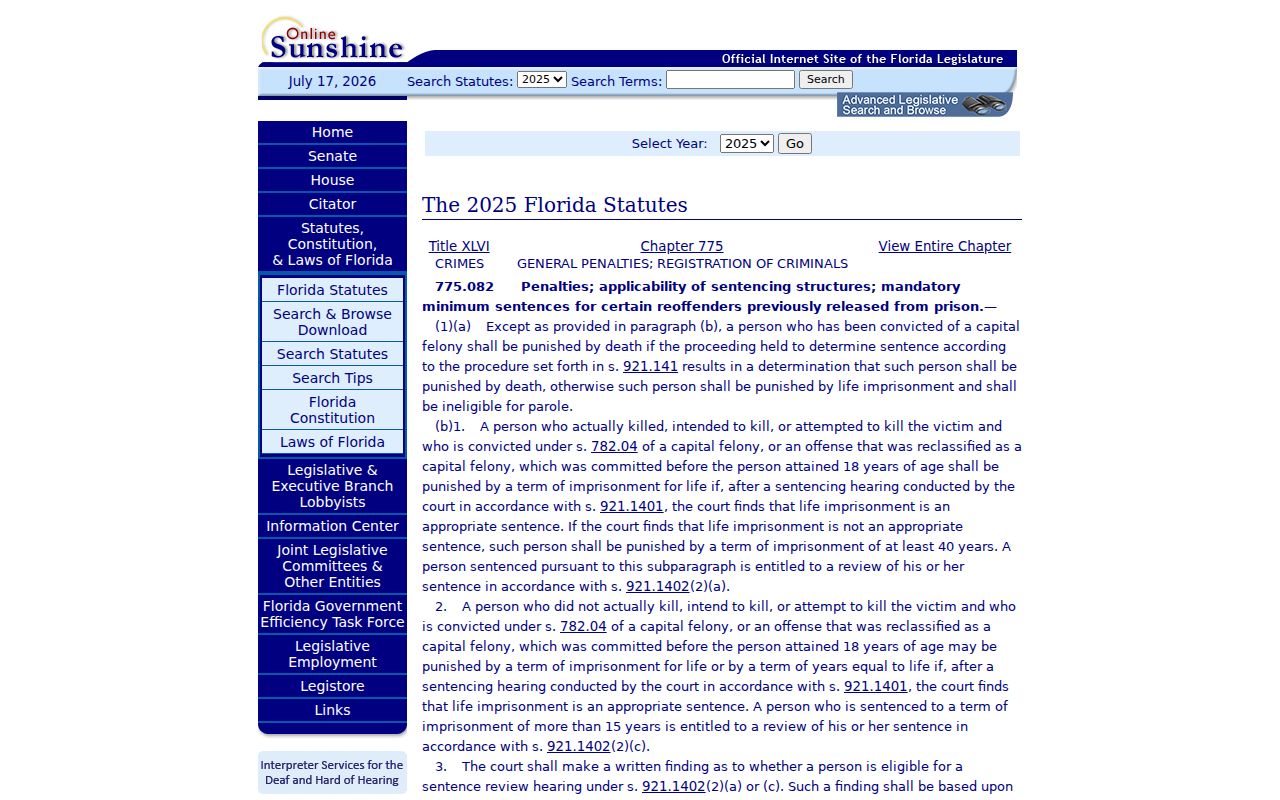
Legal duties and penalties require the current statute and the exact record, not a label guessed from search results.
Hendry Checks Across State Lines
The National Sex Offender Public Website adds a cross-state layer when a person or address may connect to another jurisdiction. NSOPW gathers participating public registries, then directs readers back to the responsible jurisdiction for detail. It does not replace FDLE for a Florida designation or the Hendry County Sheriff's local registration contact.
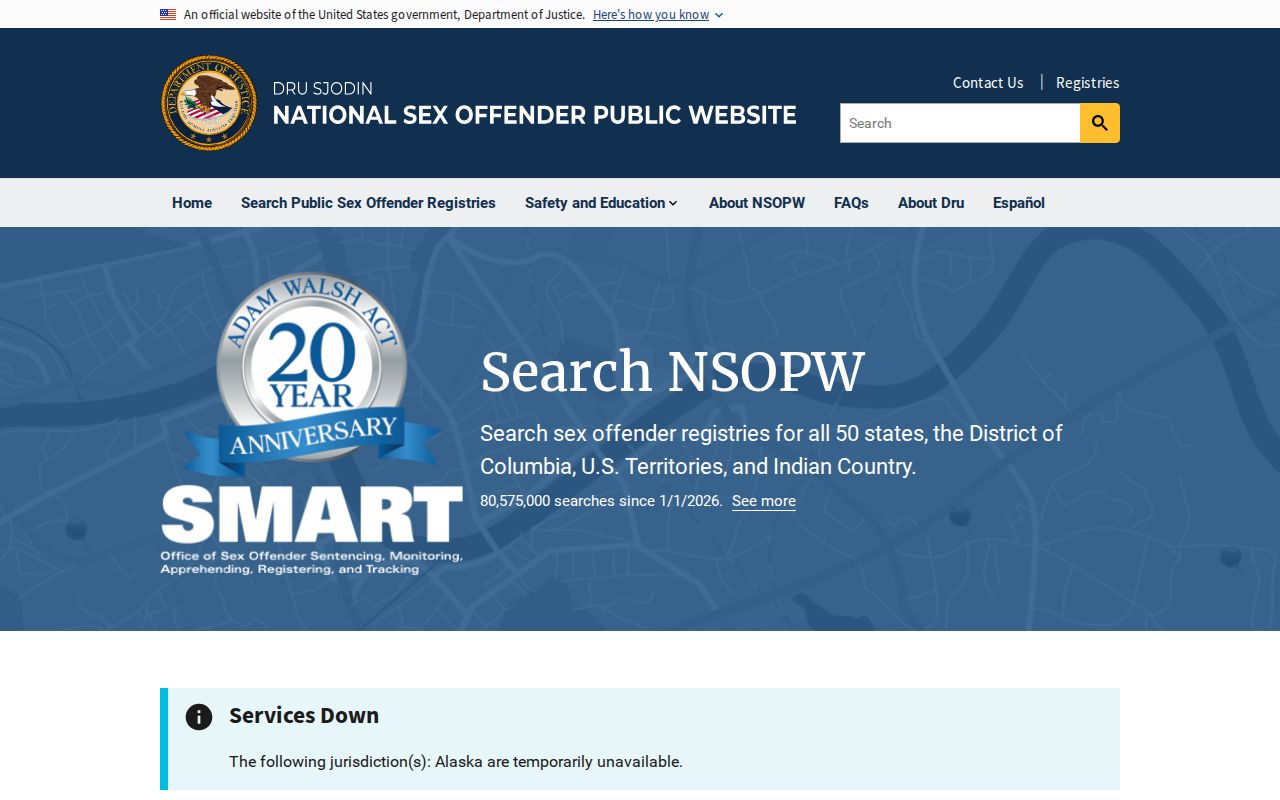
The national search broadens geographic reach, while Florida and Hendry officials remain responsible for confirming local data.
Hendry Registration and Noncompliance
For registration instructions or suspected noncompliance, contact the Hendry County Sheriff at 101 S. Bridge Street, LaBelle, FL 33935, (863) 674-5600. Call first for an appointment, reporting location, and current instructions. Research did not establish that the Clewiston satellite completes offender registration, so do not assume either office can handle the same task.
Hendry County Sheriff
101 S. Bridge Street
LaBelle, FL 33935
(863) 674-5600
Registration guidance and reports of suspected noncompliance.
Call 911 for an emergency. For a nonurgent discrepancy, preserve the profile URL and explain the suspected issue to the sheriff or FDLE.
When calling about registration rather than a public search, describe the task clearly. A person may need current instructions for initial reporting, an address or vehicle update, verification, or another statutory change. The researched sources do not establish the exact Hendry appointment calendar or prove that both Sheriff locations perform every function. Calling the LaBelle headquarters first prevents a trip to a counter that cannot complete the transaction. The public should use the same contact for a suspected noncompliance report while avoiding assumptions based on an old screenshot.
Lawful Hendry Community Use
Registry information exists for public awareness and safety planning. Use it to understand a neighborhood, discuss age-appropriate safety, or verify the current public status shown by the responsible agency. Absence from this registry is not a general background check because most crimes do not create registration duties.
Use registry data lawfully: Florida registry information does not authorize harassment, threats, intimidation, vigilantism, or any criminal act against a listed person or household.
The warning protects both public safety and the integrity of reports to law enforcement. Send suspected violations to officials and let them verify the facts.